
The Kind of Breakup That Looks Sudden (But Isn’t): When No One Feels Secure

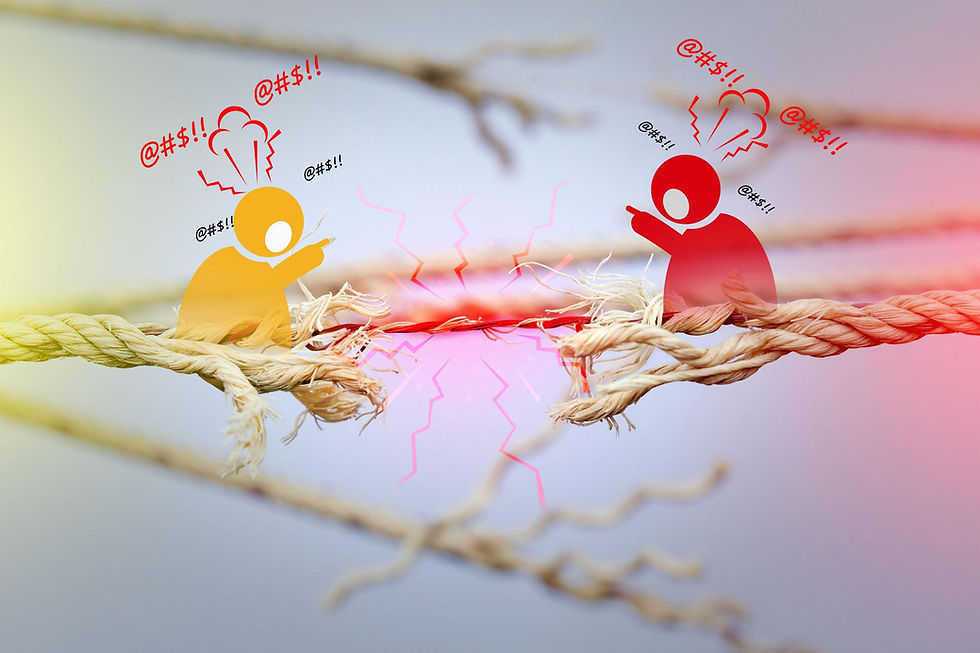
Someone close to me is going through a heartbreaking breakup.
From the outside, it didn’t look dramatic in the way people expect. No big, final explosion. No last fight you could point to. From my perspective, the way it ended felt… cold. Not because it lacked feeling—but because it seemed to land all at once, without much warning on the surface—at least for him.
And yet, if you were paying attention, there were signs.
Arguments that didn’t quite resolve. Tension that lingered longer than it should have. Moments where things got misread, missed, or taken the wrong way. Two people trying—but not in ways that actually landed for each other.
At times, it looked like one partner was anxious—voicing concerns, complaining… maybe more than she wanted to .And the other? He’s sharp—successful, socially skilled. But in those moments, he’d deflect. Make a joke. Lighten it just enough to move past it… and at times, frame the issue as something that lived mostly on her side—something she needed to figure out or calm down. Without ever really stepping into what was being asked of him.
In the end, she’s the one who walked away.
And the question that keeps coming up for me is this:
Did she stop loving him… or did she reach a point where she couldn’t keep feeling like she was the only one holding the relationship together?
Because those are not the same thing.
And I’ll be honest—this one has had me spinning for him. Trying to make sense of it. And wondering how many other people find themselves in this exact kind of dynamic, without quite having the language for it.

If we look at this through the lens of Attachment Theory, it starts to come into focus in a different way.
Not as a one-off breakup. But as a pattern.
If she leans more anxious-preoccupied, her experience likely wasn’t just about this moment.
It was about a build-up.
Noticing small shifts. Feeling distance before it was named. Trying to close that gap—by asking, explaining, bringing things up again.
Not because she wanted to be “a lot,” but because something didn’t feel steady.
And over time, that effort can start to come out differently.
More urgency. More frustration. More repetition of the same conversation, hoping it might finally land.
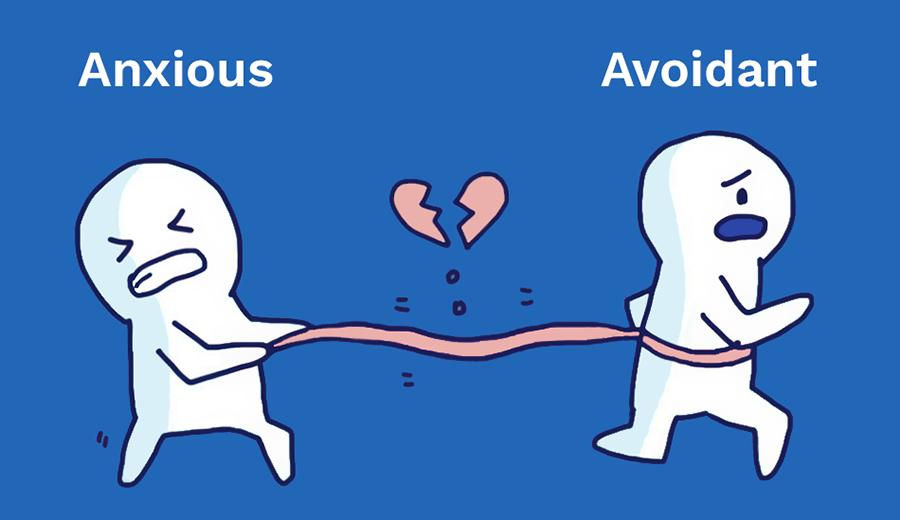
On the other side, if he leans more fearful-avoidant, the experience can feel just as real—but harder to articulate.
Because it doesn’t feel like disconnection.
It feels like pressure.
Like something that was once easy is now asking more than you quite know how to give.
So instead of meeting those moments directly, you manage them.
You soften the conversation. You shift the tone. You make it lighter, less intense, easier to move past.
And sometimes, without fully realizing it, you start to treat the problem as something that lives mostly on the other side.
From the inside, it can feel like: I am here. I’m trying. Why does it keep feeling like I’m getting it wrong?
From the other side, it feels like: I keep showing up… why does it feel like I’m doing this alone?
And this is where things start to tighten.

The more one person feels the distance, the more they reach. The more they reach, the more the other feels pressure. The more pressure builds, the more subtle distance shows up.
Not always obvious. Not always intentional.
But enough.
Until eventually, something gives.
And when it does, it can look sudden—especially to the person who didn’t fully feel how long it had been building.
If you see yourself on his side of this
There are usually a few things that line up:
You care—but consistency gets harder over time. You can be present, even connected—but something shifts when more is asked of you. You tend to deflect or smooth things over instead of fully stepping into heavier conversations. You feel overwhelmed by your partner’s needs, even when part of you understands them. You’ve been told you’re hard to read… or that you minimize things that matter. And when it ends, you’re left trying to make sense of how something that felt real still didn’t hold.
This isn’t about a lack of love.
It’s about how quickly closeness can start to feel risky—how underneath it, there can be a quiet expectation that something will go wrong, that you’ll be let down, or eventually left.
So part of you stays…and part of you holds back.
Moving toward something more steady
If this pattern feels familiar, the shift isn’t dramatic.
It’s subtle. Repetitive. A little uncomfortable.
It’s learning how to stay in moments where you’d normally move away.
That might look like:
Not making the joke right away. Not changing the subject when things get too real. Letting the other person finish—even if you already feel the urge to shut down. Saying something honest, even if it’s incomplete.
“I don’t fully know how to respond right now, but I’m here.” “I feel myself wanting to check out, but I don’t want to do that.”
Small things. But they land differently.
It’s also getting more specific with yourself.
Instead of this is too much—what exactly is too much?
The timing? The tone? The expectation?
Because clarity reduces the kind of pressure that leads to distance.
And over time, it’s learning to tolerate something that can feel unfamiliar at first:
Consistency.
Not the intensity at the beginning. Not the emotional spikes.
Just steady presence, over and over again.
What actually changes the outcome
These relationships don’t fall apart because there was no connection.
If anything, there’s usually a lot of it.
They fall apart because there isn’t a reliable way to stay connected when things get uncomfortable, vulnerable, or emotionally demanding.
And that’s the part that can shift.
Not all at once. Not perfectly.
But in the moments where you would normally move away—and instead, you stay.
Even just a little longer than you’re used to.
Because over time, that’s what turns something that almost works into something that can actually hold.
If you’re curious about attachment styles and how they might show up in your own relationships, these books are a helpful place to start.
Understanding Your Attachment Style by Marc Cameron
Attached by Amir Levine and Rachel Heller


Comments